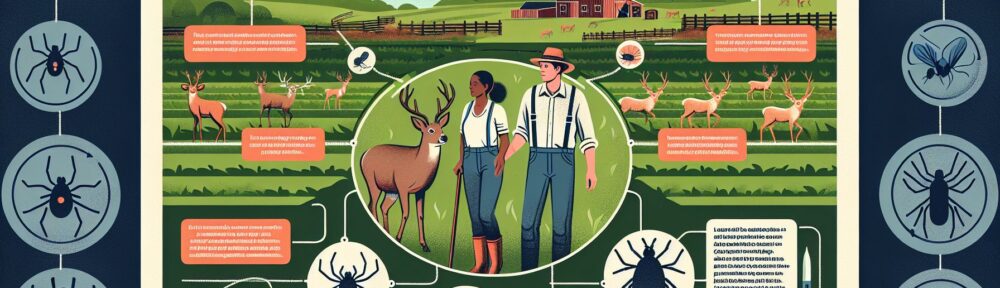
As a farmer, you are no stranger to the various pests and critters that can wreak havoc on your crops and livestock. However, there is one particular threat that often goes unnoticed but can have serious consequences for both you and your animals: Lyme disease. This debilitating illness is caused by the bacterium Borrelia burgdorferi, which is transmitted to humans and animals through the bite of infected ticks.
While Lyme disease is commonly associated with deer ticks, also known as blacklegged ticks, other animals and insects can also carry and transmit the disease. As a farmer, it is important to be aware of these potential carriers in order to protect yourself, your family, and your livestock from this dangerous illness.
One of the most common carriers of Lyme disease is the white-footed mouse. These small rodents are often found in rural areas and are known to harbor the ticks that carry the Borrelia burgdorferi bacterium. By controlling the mouse population on your farm and implementing tick prevention measures, you can reduce the risk of Lyme disease transmission to yourself and your animals.
Another common carrier of Lyme disease is the white-tailed deer. These majestic animals are often found grazing in fields and meadows, making them prime targets for deer ticks. By creating barriers to keep deer away from your farm and implementing tick control measures, you can help reduce the risk of Lyme disease transmission on your property.
In addition to mice and deer, other animals such as raccoons, squirrels, and chipmunks can also carry and transmit Lyme disease. By keeping your farm clean and free of debris that can attract these animals, you can lower the risk of Lyme disease transmission to yourself and your livestock.
It is not just animals that farmers need to be wary of when it comes to Lyme disease. Insects such as mosquitoes and fleas can also harbor the Borrelia burgdorferi bacterium and transmit the disease to humans and animals. By implementing mosquito and flea control measures on your farm, you can help reduce the risk of Lyme disease transmission.
If you or your animals do happen to contract Lyme disease, it is important to seek treatment immediately. The symptoms of Lyme disease can vary, but common signs include fever, fatigue, muscle aches, and joint pain. If left untreated, Lyme disease can lead to more serious complications such as arthritis, heart problems, and neurological issues.
Treatment for Lyme disease typically involves antibiotics to help kill the bacterium and alleviate symptoms. In severe cases, intravenous antibiotics may be necessary to effectively treat the infection. It is important to consult with a healthcare provider if you suspect that you or your animals have contracted Lyme disease.
In conclusion, as a farmer, it is crucial to be aware of the animals and insects that can carry and transmit Lyme disease. By taking preventative measures to control tick and insect populations on your farm and seeking treatment promptly if you or your animals show signs of infection, you can protect yourself and your livestock from this potentially debilitating illness. Stay vigilant, stay informed, and stay safe.