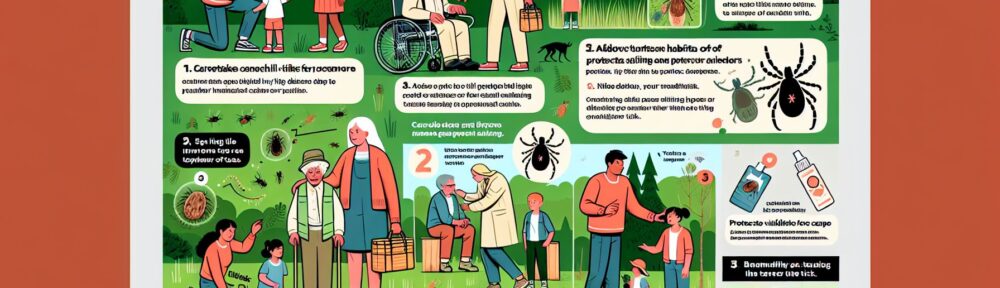
As a caretaker, your top priority is always the health and well-being of the person under your care. One important aspect of this responsibility is protecting them from potential health risks, such as Lyme disease. Lyme disease is an infection caused by the bacterium Borrelia burgdorferi, which is transmitted to humans through the bite of infected black-legged ticks. It can lead to a range of symptoms, from mild to severe, including fever, fatigue, joint pain, and neurological issues.
To prevent Lyme disease from affecting your loved one, there are several steps you can take as a caretaker. Here are some helpful tips to keep in mind:
-
Be vigilant about tick prevention:
Ticks are most commonly found in wooded and grassy areas, so it’s important to be cautious when spending time outdoors. Make sure your loved one wears long sleeves, long pants, and closed-toe shoes when in tick-prone areas. You can also apply insect repellent containing DEET to their skin and treat clothing with products containing permethrin. -
Conduct regular tick checks:
After spending time outdoors, be sure to thoroughly check your loved one’s entire body for ticks. Pay close attention to areas such as the scalp, behind the ears, under the arms, and around the waistband. If you find a tick attached to their skin, use fine-tipped tweezers to carefully remove it, making sure to grasp it as close to the skin’s surface as possible. -
Create a tick-safe environment:
Keep your living space as tick-free as possible by regularly mowing the lawn, removing leaf litter, and keeping woodpiles and bird feeders away from the house. You can also create physical barriers, such as installing deer fencing or landscaping with gravel or wood chips, to deter ticks from entering your property. -
Educate yourself about Lyme disease:
Knowledge is power when it comes to preventing Lyme disease. Take the time to learn about the signs and symptoms of the infection, as well as the most effective ways to treat and manage it. Stay informed about local trends in tick populations and disease prevalence, so you can tailor your prevention efforts accordingly. -
Consult with healthcare professionals:
If you suspect that your loved one may have been exposed to ticks or if they start exhibiting symptoms of Lyme disease, don’t hesitate to seek medical advice. Early detection and treatment are key to preventing the progression of the infection and minimizing potential complications. Your healthcare provider can recommend appropriate diagnostic tests and prescribe a course of antibiotics if necessary.
By following these simple yet effective tips, you can help protect your loved one from the risks of Lyme disease and ensure their continued health and well-being. Remember, prevention is always better than cure, so stay proactive in your efforts to keep ticks at bay and reduce the chances of infection. Your vigilance and care can make all the difference in safeguarding your loved one’s health.