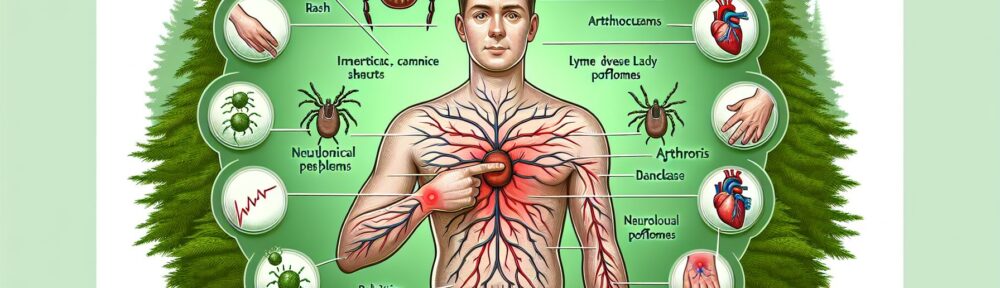
It’s a familiar tale: You return home after a lovely day outdoors, but then notice a small yet oddly menacing red bump on your skin. Could it be just a simple bug bite, or is it something more sinister? Could it be a signal that you’ve been infected with Lyme disease? Behind its innocent veil, Lyme disease lurks as a growing public health concern in several parts of the United States and beyond. This article aims to demystify Lyme disease by discussing its symptoms, helping adults ascertain whether they might be affected.
What Is Lyme Disease?
Before delving into the symptoms of Lyme disease, it’s important to first understand what it is. Lyme disease is a bacterial infection primarily transmitted by black-legged ticks (commonly known as deer ticks) and western black-legged ticks. The culprit behind the scene is the bacteria Borrelia burgdorferi and Borrelia mayonii, which are carried by these ticks.
Early Symptoms of Lyme Disease
In the early stages, which usually occur three to 30 days after the tick bite, Lyme disease can present mild yet noticeable symptoms. These early signs serve as your body’s initial warning signal, indicating something isn’t quite right.
Erythema Migrans (EM)
Erythema migrans, the hallmark symptom of Lyme disease, appears as a red rash typically at the site of the tick bite. The rash often exhibits a distinctive bull’s-eye pattern, although it’s not always the case.
Flu-Like Symptoms
One of the telling signs of early Lyme disease is a suite of flu-like symptoms including fever, chills, fatigue, body aches, headache, neck stiffness, and swollen lymph nodes. These symptoms can be deceptive, often leading individuals to think that they’re just coming down with a common cold or flu, thus delaying crucial early treatment.
Late Symptoms of Lyme Disease
If Lyme disease goes unnoticed or untreated, it may progress into its later stages, which can occur weeks, months, or even years after the initial tick bite. These later symptoms tend to be more severe and persistent, affecting different body systems.
Musculoskeletal Symptoms
A common symptom in the late phase of Lyme disease is joint pain, often presenting as intermittent bouts of arthritis with severe joint pain and swelling. The knee is the most commonly affected, but pain can shift from one joint to another.
Neurological Symptoms
The bacteria causing Lyme can also invade your nervous system, causing neurological complications like meningitis (inflammation of the membrane around the brain and spinal cord), Bell’s palsy (temporary paralysis of one side of your face), numbness or weakness in your limbs, and impaired muscle movement.
Other Symptoms
Other late symptoms may include heart palpitations or an irregular heartbeat (a condition known as Lyme carditis), eye inflammation, severe headache, or stiff neck, liver inflammation (hepatitis), and severe fatigue.
When to Seek Medical Attention?
If you have been bitten by a tick and notice any of these symptoms particularly an expanding rash or severe fatigue — it’s recommended to consult a healthcare provider as soon as possible. The earlier Lyme disease is diagnosed, the sooner treatment can begin, and the better your chances are to prevent long-term complications.
Conclusion
Lyme disease is a subtle, treacherous adversary. Its symptoms masquerade as more common, banal health conditions, often leading to misdiagnoses. However, with increased awareness and vigilance, we can effectively unmask this hidden enemy. Since Lyme disease is typically transmitted through tick bites, it’s essential to take preventative measures during outdoor activities, especially in areas known for high tick activity. Know the symptoms, trust your body when it signals that something isn’t right, and seek medical help promptly. By doing so, we stand a fighting chance against Lyme.